
CO is not detectable by smell
Do not use odor, an open window, a fan, or a working CO alarm to judge whether a generator is safely placed. Prevent exposure by following the exact equipment instructions and current safety guidance.Why carbon monoxide matters
Carbon monoxide (CO) is a colorless, odorless gas produced when fuel burns. Generators, furnaces, and other fuel-burning equipment can create CO. It can build up indoors and cause sudden illness or death before people recognize what is happening.
CO alarms add protection, but they do not make it safe to run a generator indoors, near an opening, or contrary to the equipment instructions.
Portable generators: outdoors and away from openings
CPSC’s 2026 guidance is to operate portable generators outdoors only, at least 20 feet from homes and buildings, with exhaust directed away from windows, doors, and vents. Never operate a portable generator inside a home, garage, basement, crawlspace, shed, or other enclosed area—even with doors or windows open. A porch or carport is not a safe substitute for the recommended location.
Follow the exact generator manual for operating conditions, cords, wet-weather precautions, refueling, and maintenance. Use a model with a CO shutoff feature where available, while remembering that the feature is not a substitute for safe placement.
Permanently installed standby units: follow the exact model instructions
A permanently installed standby generator has its own installation listing and instructions. Do not copy the 20-foot portable-generator placement rule to a fixed standby unit, and do not substitute a generic online clearance chart for the exact current installation manual. Placement must account for the model, exhaust, openings, combustible surfaces, service access, fuel equipment, property layout, local code, and permit authority.
Have a qualified local installer confirm the proposed site with the authority having jurisdiction before installation. Our standby placement guide explains the limits of manufacturer examples and generic setback claims.
CO alarm placement and maintenance
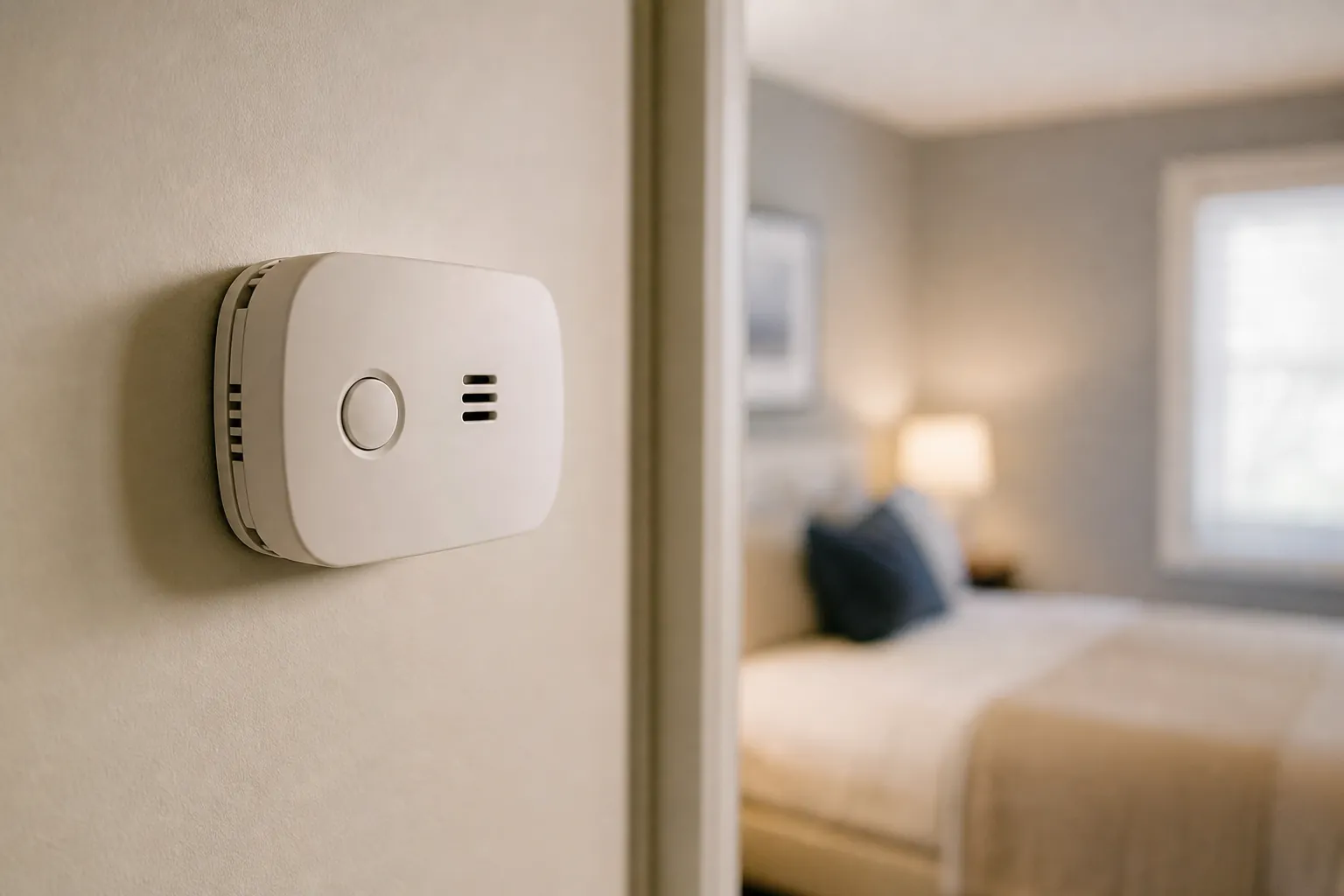
- Install battery-operated alarms or alarms with battery backup on every level and outside sleeping areas, following the device manufacturer’s instructions.
- Interconnected alarms are preferable where suitable; an alarm on one level can alert people elsewhere in the home.
- Test alarms monthly and replace batteries as directed. Replace the alarm at the end of its stated service life or as the manufacturer instructs.
- Keep alarms clear of furniture or draperies that could obstruct them.
CPSC states that alarms provide added protection but are not a substitute for properly installing and maintaining fuel-burning equipment.
Symptoms can resemble other illnesses
The CDC lists headache, dizziness, weakness, upset stomach, vomiting, chest pain, and confusion as common symptoms. Symptoms vary with exposure and the individual. People who are asleep or unable to recognize symptoms may be at particular risk. If anyone feels ill around a running generator or other fuel-burning appliance, move to fresh air and seek emergency help rather than trying to diagnose the cause indoors.
If the alarm sounds or CO exposure is suspected
- Get everyone outside to fresh air immediately. Do not search for the source before leaving.
- Call 911 or local emergency services from outside the building.
- Account for everyone, including children and pets; tell responders about possible exposure and symptoms.
- Do not re-enter until emergency responders say it is safe.
- Seek prompt medical attention if exposure is suspected. Have the source equipment inspected by a qualified professional before reuse.
If a gas leak is also suspected, leave without operating electrical switches, lights, or phones; contact the gas utility or local gas authority from outside.