
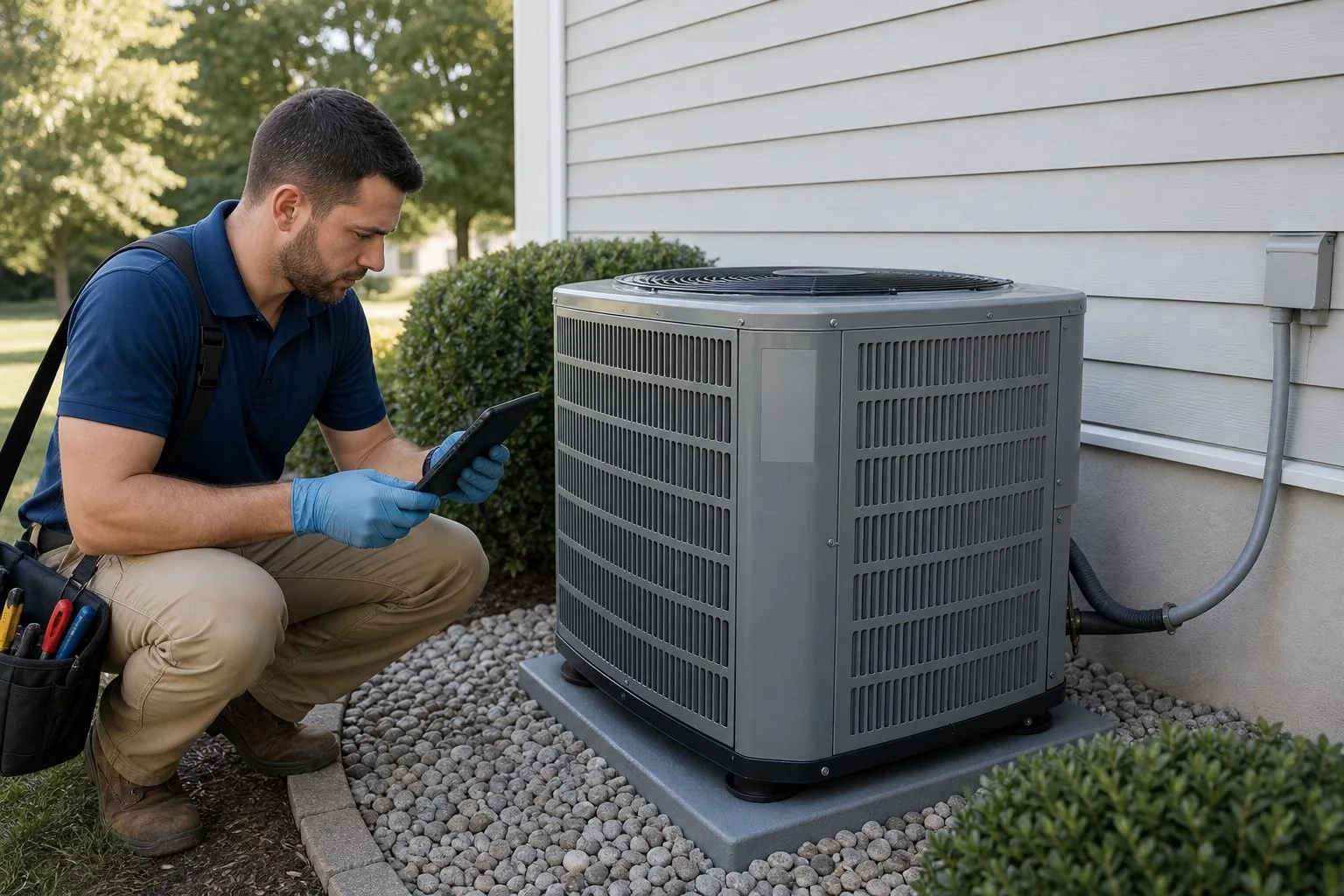
Why HVAC data matters
Central air conditioners and heat pumps include motors and electronic controls, and may be among the larger loads in a home. Whether they can operate on backup depends on the exact equipment, other loads running at the same time, starting behavior, generator rating on the chosen fuel, and transfer/load-management configuration. Home size or nominal cooling tonnage is not enough to select a generator.
Collect the exact HVAC information
Photograph the outdoor and indoor equipment nameplates and collect the manufacturer manuals or technical data. Record the exact model numbers and any published voltage, phase, rated current/input, locked-rotor or starting-current data, and auxiliary-heat information. Not every label exposes every starting figure; do not fill missing fields with a rule of thumb.
Champion’s wattage chart provides generic reference ranges for some common air conditioners. It is a manufacturer-published estimate, not a measurement of your equipment or a sizing recommendation. Use the sourced chart only to understand the scale of possible variation while obtaining exact nameplate data.
Starting demand depends on the actual motor and controls
A motor or compressor can have a higher demand while starting than during steady operation. The relevant starting information and control behavior depend on the specific equipment. If a plate or manual lists locked-rotor amps (LRA), provide that value to the electrician; do not simply multiply it by voltage and treat the result as a complete generator-sizing answer. Power factor, voltage dip, other concurrent loads, and the generator/transfer system matter.
Soft-start or other starting-control devices are not universal fixes. Ask the HVAC manufacturer or a qualified HVAC technician whether the exact compressor accepts the device, whether it affects warranty or operation, and what verified starting data should be used in the generator design.
Heat pumps and auxiliary electric heat
Some heat-pump systems include electric auxiliary or emergency heat. Identify the exact air handler/heat-strip model and staged controls, and ask the installer which heating elements are expected to operate on generator power. Do not assume those elements are disabled, or that they can be shed safely, unless the approved system configuration explicitly provides for it.
Any load-shedding or lockout plan must be compatible with the HVAC controls and documented in the written proposal. Consider comfort and freeze-protection needs with the HVAC professional; a generic article cannot decide which heat sources a specific home should lose.
What the generator professional should verify
- Exact HVAC equipment models and manufacturer starting/running data.
- Which systems are expected to operate together and what controls or load-management devices are installed.
- Generator output on the planned fuel, site derating, electrical service, transfer equipment, and motor-starting capability.
- Whether any manufacturer-approved soft-start or sequencing changes are planned and who is responsible for them.
- Which operating limitations and load priorities will be documented for the homeowner.
Do not open electrical compartments or change HVAC wiring. Bring the nameplate photographs to a qualified local professional and request a written load assessment. Continue with the load-based sizing guide.